Products
SkyClean delivers modular pyrolysis systems for industrial carbon removal and renewable energy projects. Solutions range from the core pyrolysis module to complete plants with feedstock preparation, energy integration and site-specific Balance of Plant.
SkyClean systems to fit your project and site
SkyClean designs and delivers modular pyrolysis systems for industrial carbon removal and renewable energy projects.
Projects can be configured around the available feedstock, local opportunities for using the recovered energy and the conditions at the site.
The modular design allows the capacity and scope of each SkyClean system to be adapted to the project.
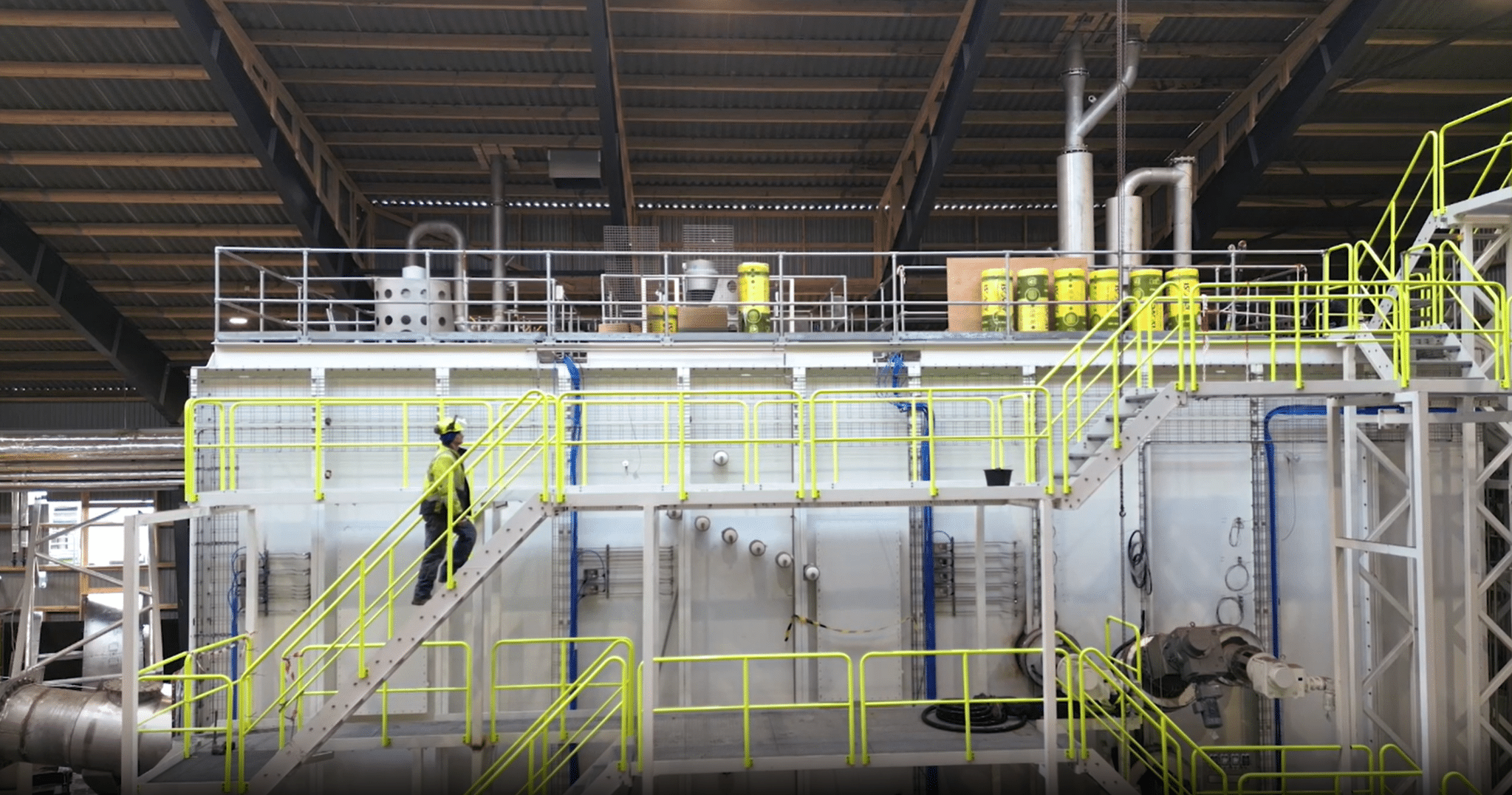
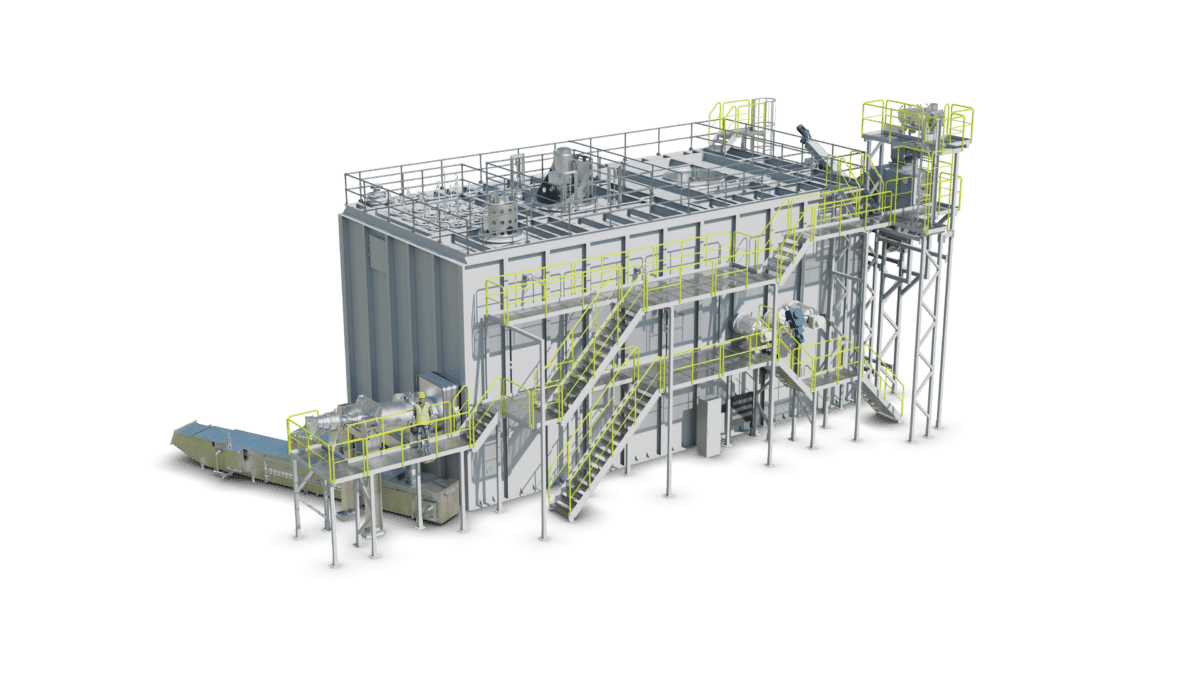
The SkyClean pyrolysis module is the core conversion technology. It can be installed as a standalone process unit or supplied as part of a complete plant with feedstock preparation, energy integration and other supporting systems.
Explore the core pyrolysis module and the complete SkyClean plant concept.
SkyClean pyrolysis module
The SkyClean pyrolysis module is the core conversion unit in every SkyClean system.
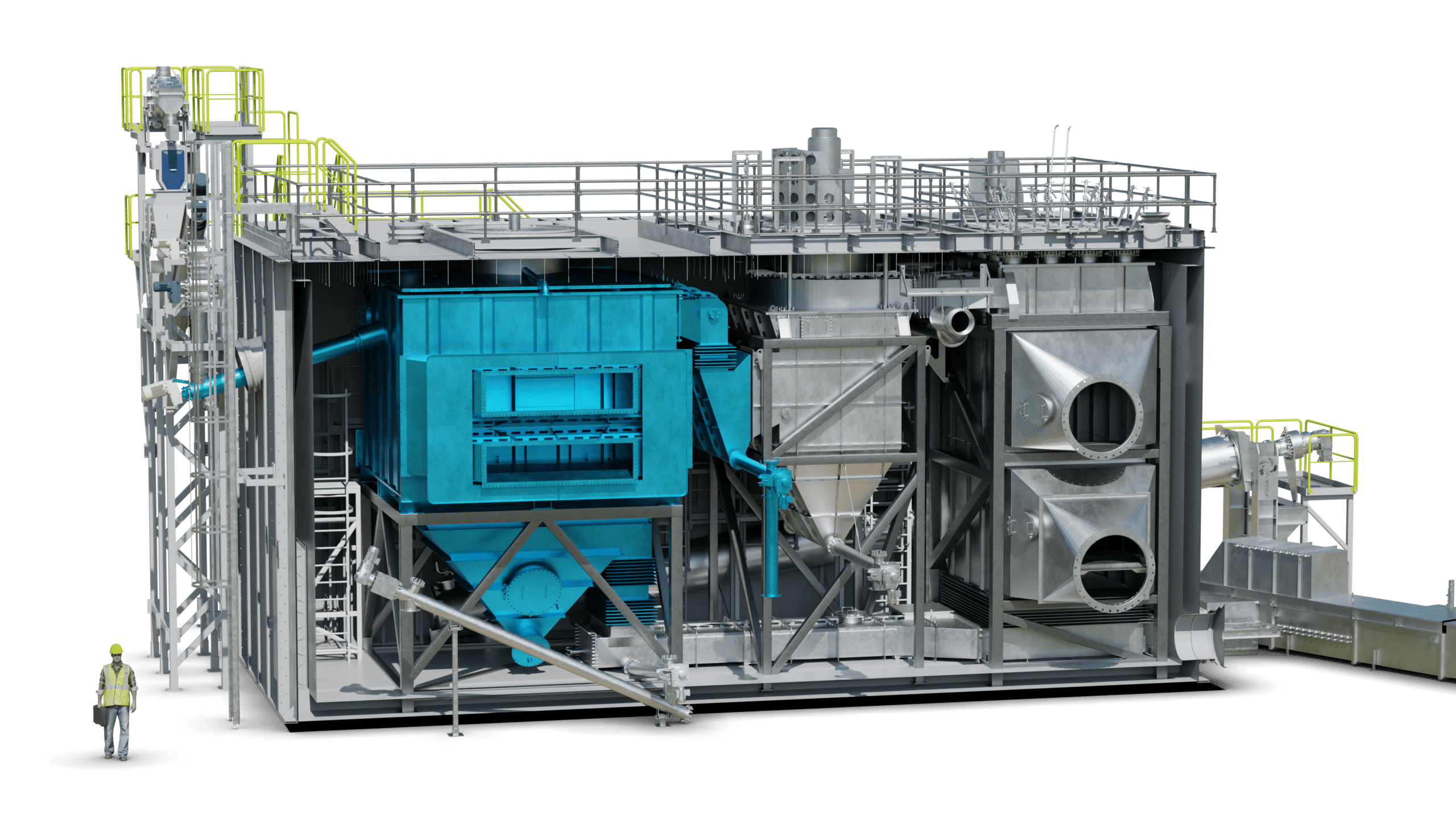
The pyrolysis module converts prepared biomass into stable biochar and energy-rich pyrolysis gas through a continuous, self-sustaining process. The module comprises three integrated components:
- The reactor
- The gas filter
- The heat exchanger
Together, they enable efficient biomass conversion, internal energy recovery, and consistent biochar production.
1. The reactor
This is where conversion takes place. Pelletised feedstock enters at the top and moves through three thermal zones: drying, torrefaction and active pyrolysis, under controlled oxygen-free conditions.
Process temperatures and residence times are controlled to ensure consistent carbonisation. Stable biochar leaves at the bottom of the reactor, while pyrolysis gas leaves at the top.
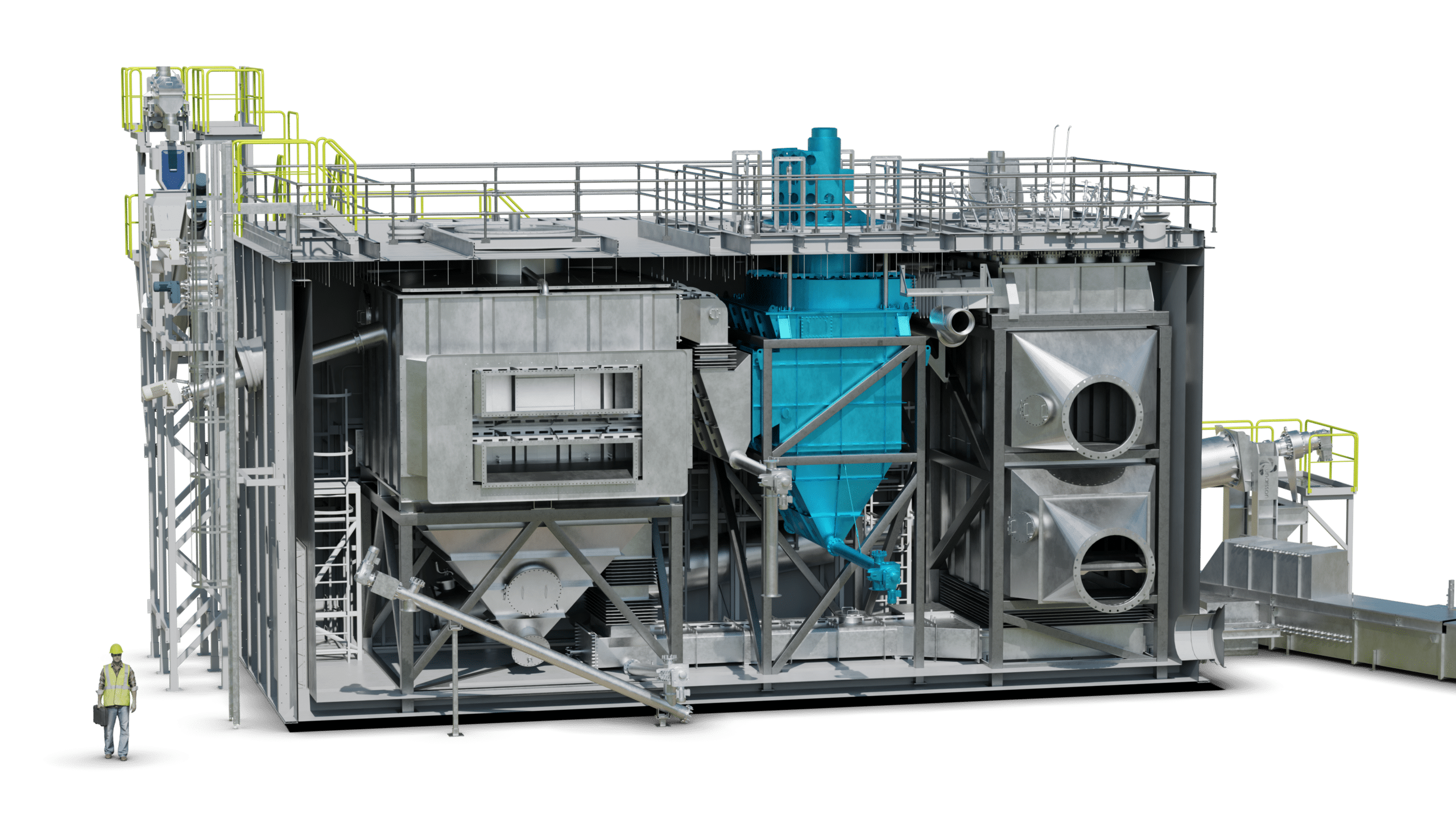
2. The gas filter
Before it is used, the pyrolysis gas passes through the SkyClean gas filter.
The filter removes dust and other particulates to protect downstream equipment. The cleaned gas can then be combusted or processed further.

3. The heat exchanger
The pyrolysis gas is combusted in a boiler to generate useful heat.
Part of the hot exhaust gas is routed through the heat exchanger, where it transfers thermal energy back to the reactor and sustains the pyrolysis process.
This internal energy recovery is central to the SkyClean process and minimises the need for external energy.
Industrial performance
High throughput, high carbon retention and efficient energy recovery are central to the SkyClean design.
The figures below show the expected performance of a 20 MW SkyClean pyrolysis module using straw pellets as feedstock.
- Infeed: 4.7 tonnes of biomass per hour at 10% moisture content
- Biochar production: 2.0 tonnes per hour
- Carbon-neutral fuel production: 8.5 MW
- CO₂ capture: 3.0 tonnes per hour
- Fossil fuel CO₂ emission reduction: 1.7 tonnes per hour
- Electrical power consumption: 0.1 MW
- Design basis: 200,000 hours
- Minimum service area: 25 m × 15 m
Assumed lower heating value (LHV) of feedstock: 17 MJ/kg on a dry basis

Flexible feedstocks
Pelletisation enables consistent processing of a wide range of suitable biomass residues.

Industrial-scale throughput
enables more feedstock to be processed, more carbon to be stored and more renewable energy to be recovered.

Stable carbon storage
The process produces stable biochar for durable carbon storage and can break down many organic contaminants present in the feedstock.
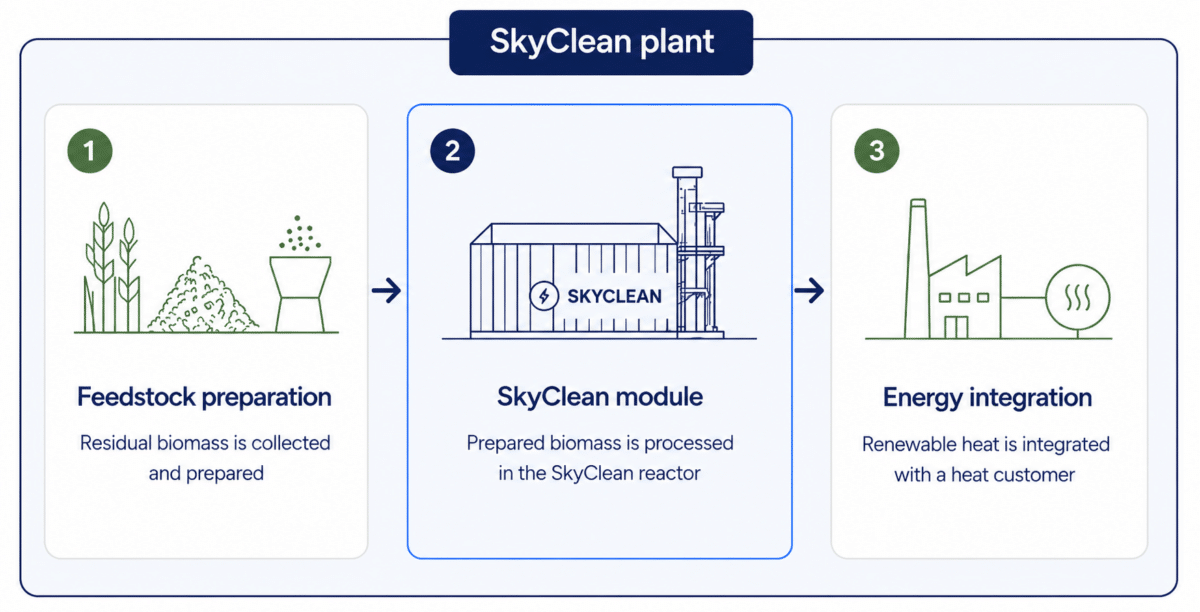
The SkyClean plant
Loading 360° viewer…
The Feedstock Preparation Module
SkyClean modules are designed for pelletised biomass with controlled moisture content, particle size and density. Drying and pelletisation prepare agricultural residues, wood waste and other suitable biomass streams for efficient conversion.
Consistent feedstock supports stable operation and reliable biochar quality.
The SkyClean Pyrolysis Module
The pyrolysis module is the core conversion technology in every SkyClean deployment.
It converts prepared biomass into stable biochar and energy-rich pyrolysis gas through a continuous, self-sustaining pyrolysis process.
The Energy Integration Module
Energy recovered as carbon-neutral fuels during pyrolysis can be used within the plant or supplied to industrial facilities, greenhouses, district-heating networks and other heat users.
The result is an integrated system that combines durable carbon storage with renewable energy production.
Flexible deployment
No two projects are identical.
SkyClean offers flexible deployment models ranging from the core pyrolysis module to complete plants that include feedstock preparation, energy integration, and site-specific balance-of-plant solutions.
The modular architecture allows each plant configuration to be adapted to the available feedstock, site conditions, and desired project outcomes.
Why slow pyrolysis?
Slow pyrolysis combines high carbon retention with efficient energy recovery in a fully continuous industrial process.
The SkyClean updraft fixed-bed reactor with recirculation of pyrolysis gas was developed at the Technical University of Denmark (DTU) and industrialised by Stiesdal SkyClean. The biomass does not burn inside the reactor. Instead, recirculated gas transfers heat directly to the feedstock and helps maintain a uniform carbonisation temperature.
The result is a feedstock-flexible process with straightforward process control, high biochar yields and consistent biochar quality suitable for durable carbon storage.
Today, this technology forms the core of every SkyClean system and operates at commercial scale at the 20 MW plant in Vrå, Denmark.
Frequently asked questions
Can pyrolysis create heavy metals?
No. Pyrolysis cannot create new chemical elements, including heavy metals, but metals already present in the feedstock remain in the biochar and may become more concentrated as other parts of the biomass are converted into gas.
Pyrolysis does not add heavy metals that were not already present in the original biomass. In fact, heavy metals tend to be stronger bound in biochar than in crop residues, thereby reducing the leaching rate to the environment.
Can pyrolysis produce other contaminants?
Some unwanted organic compounds can form during pyrolysis if the process is not properly controlled. Feedstock quality, temperature, residence time and gas handling must therefore be managed carefully.
SkyClean controls the production conditions and independently tests the resulting biochar to document compliance with the applicable quality requirements.
Independent laboratory analyses show that contaminant levels in SkyClean biochar are below the relevant limits for the intended agricultural applications.
SkyClean biochar also meets the applicable limits for constituents in fertilisers.
Is pyrolysis an energy-intensive process?
A SkyClean plant uses approximately 5% of the feedstock’s energy content to sustain the pyrolysis process. The remaining energy is retained in the biochar or recovered as useful carbon-neutral fuels.
Pyrolysis is therefore not highly energy-intensive relative to the energy contained in the feedstock.
Can pyrolysis reduce the amount of contaminants in agriculture?
Yes, pyrolysis tends to reduce contamination. A recent study by DTU and Aarhus University found that the amount of polyaromatic compounds (PAHs), PFAS and dioxins were significantly lower in biochar than in the feedstock.
In addition, pesticides, antibiotics, microplastics, oestrogen-like substances and other contaminants occurring in residues from conventional, commercial agriculture tend to be broken down to non-active substances at the high temperatures of pyrolysis, thereby serving to reduce the overall level of soil contamination.
Planning a pyrolysis project?
SkyClean supports projects from early concept and business case development to system delivery, integration, and operation.